




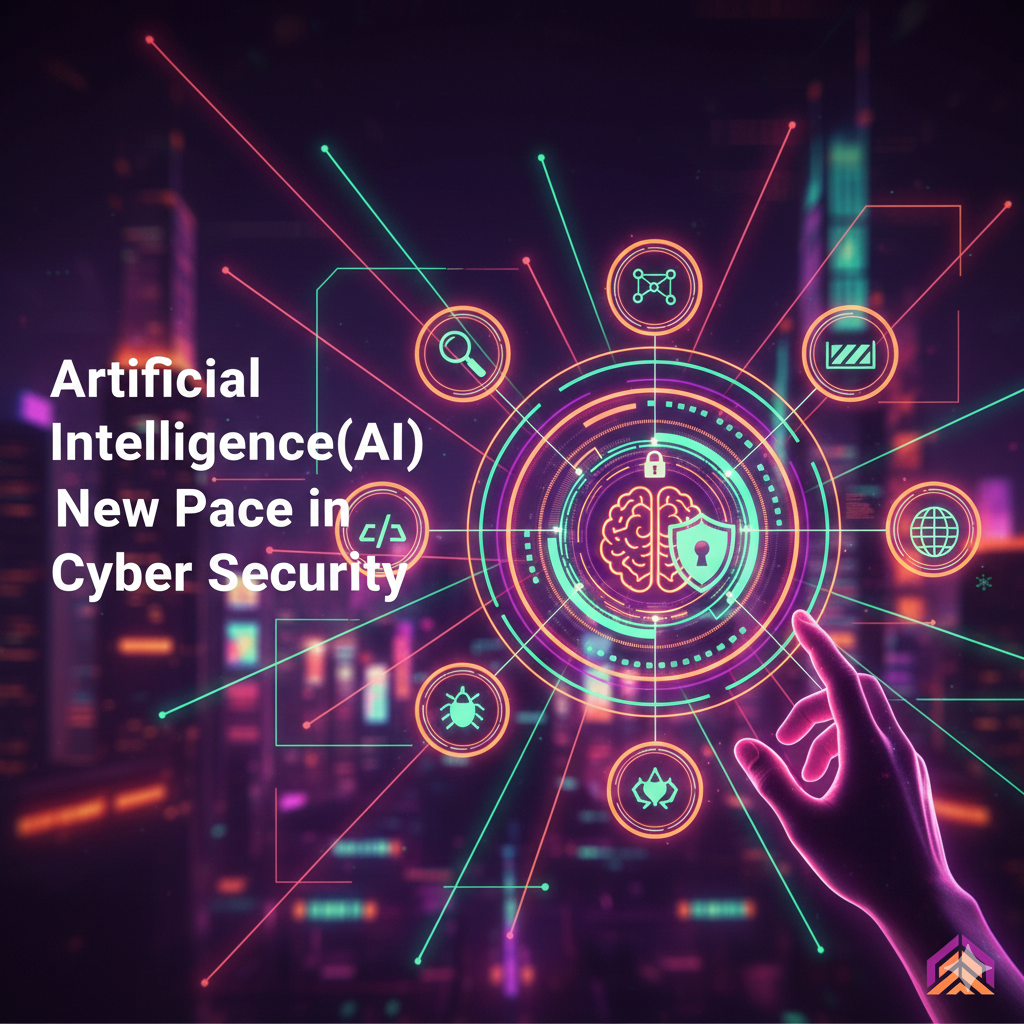
As the world continues to digitize at an unprecedented rate, concerns around cybersecurity have grown significantly. Cybercriminals now have a far wider reach, enabling them to target individuals and organizations across the globe. Fortunately, Artificial Intelligence (AI) and Machine Learning (ML) offer powerful tools to help combat cybercrime.
By integrating AI with cybersecurity, organizations gain faster insights and dramatically reduced response times. While updating existing security solutions and adding multiple layers of defense does not guarantee complete protection, leveraging advanced technologies like AI can significantly ease the burden on security professionals and improve overall resilience.
Artificial Intelligence (AI) is a branch of computer science focused on creating intelligent machines capable of mimicking human thinking and decision-making. In cybersecurity, AI plays a critical role in detecting, analyzing, and responding to threats more efficiently than traditional methods.
With cyberattacks increasing daily in both frequency and sophistication, organizations must elevate their defenses. AI-powered security tools help identify threats earlier, adapt to new attack patterns, and automate responses to incidents. AI-driven cybersecurity systems continuously analyze vast datasets, adjust their models, and refine threat detection strategies in real time.
AI systems are trained using billions of data points—such as logs, malware samples, blogs, and threat intelligence feeds. Through machine learning and deep learning techniques, AI improves its ability to “understand” and recognize cybersecurity threats.
Once trained, AI applies reasoning to uncover relationships between threats, such as malicious files, compromised accounts, or insider activity. This process takes seconds or minutes, enabling security analysts to respond to incidents up to 60 times faster than traditional approaches.
While AI has replaced human labor in some industries, cybersecurity is different. Human intuition, experience, and contextual understanding remain irreplaceable. AI is designed to support, not replace, cybersecurity professionals—allowing them to focus on critical decision-making and advanced threat analysis. Autonomous cybersecurity does not mean cybersecurity without humans.
The short answer is no. While AI will transform how cybersecurity work is performed, it will not eliminate the need for skilled professionals. Instead, it will change job roles and create demand for new expertise—such as training AI models, validating results, and interpreting complex threat scenarios.
AI helps close skill gaps and strengthens specific areas of cybersecurity, but it also requires humans to guide, monitor, and refine its outputs. Rather than competing, AI and the human workforce complement each other. Together, they form a more effective frontline defense against cyber threats.
AI excels at processing large datasets and automating repetitive tasks, but it cannot replace human judgment and insight. Certain security decisions require contextual understanding and interpretation that algorithms are not yet capable of fully replicating.
The future of cybersecurity lies in collaboration—where AI enhances efficiency and scale, and humans provide strategic thinking and critical analysis. Together, they represent a powerful and promising force in the evolving landscape of cyber defense.