




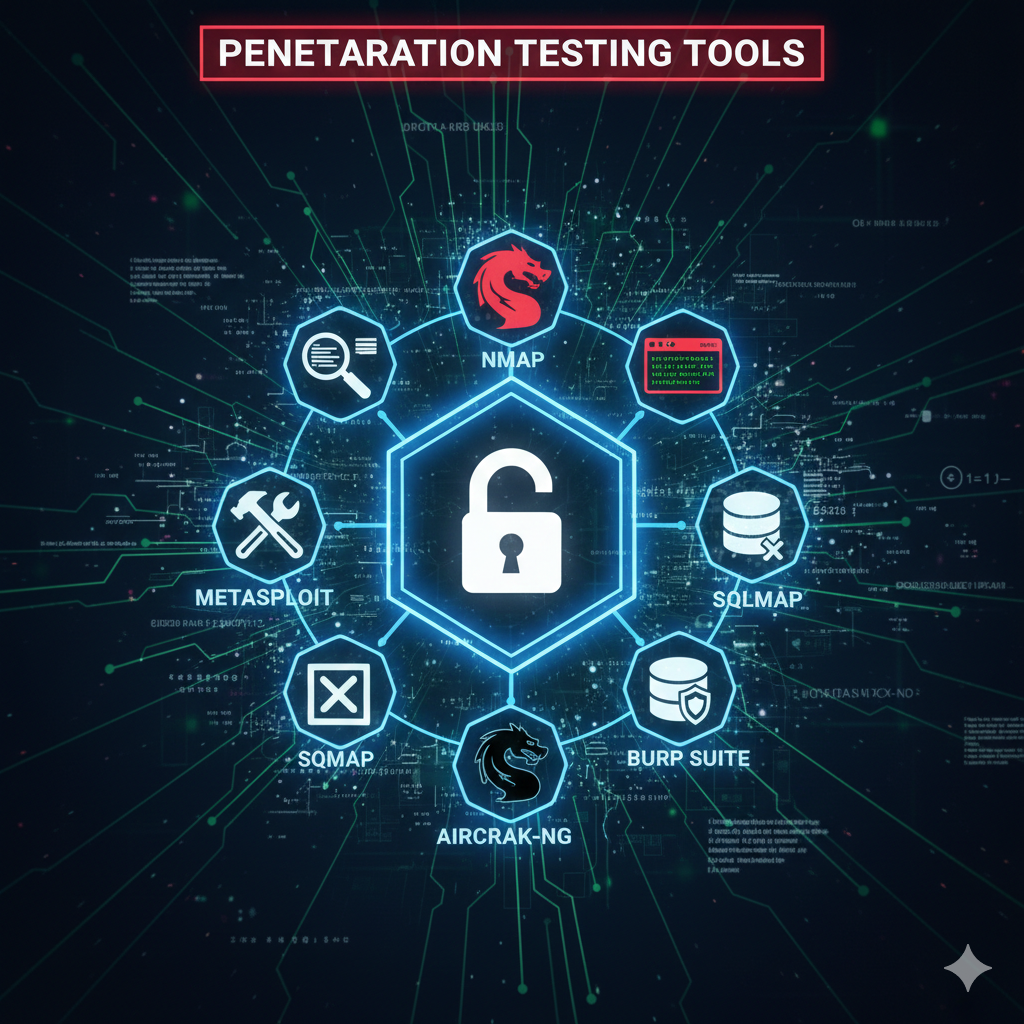
Cybercriminals are continually adapting to emerging technologies. Unfortunately, they are often advancing their attack techniques faster than defenders can respond. Given current trends, it is safe to assume that cybercriminals will continue to launch increasingly bold and sophisticated attacks in the years ahead. As a result, no system can be considered completely safe, and both individuals and organizations must remain vigilant and take every possible measure to protect their assets.
There is considerable confusion within the cybersecurity industry regarding the differences between vulnerability scanning and penetration testing, as the terms are often used interchangeably. However, their purposes and implications are very different. A vulnerability assessment focuses on identifying and reporting known vulnerabilities, whereas a penetration test attempts to exploit those vulnerabilities to determine whether unauthorized access or other malicious activity is possible. Penetration testing typically includes network and application testing and evaluates security controls and processes. These tests should be conducted both externally—attempting to breach the network from the outside—and internally, simulating threats originating within the network.
Penetration testing tools are used as part of a penetration test to automate tasks, improve efficiency, and uncover vulnerabilities that may be difficult to identify through manual analysis alone. Two common categories of penetration testing tools are static analysis tools and dynamic analysis tools.
1. Metasploit
Metasploit is considered the gold standard in the penetration testing industry and is one of the most advanced and widely used frameworks available. It is the result of collaboration between the open-source community and Rapid7. Metasploit focuses on identifying and exploiting known vulnerabilities and supports intrusion detection and penetration testing efforts. It is built around the concept of an exploit, which is code designed to bypass security controls and gain access to a system. Once access is achieved, a payload is executed to perform specific actions on the target system. Metasploit supports web applications, networks, and servers, and runs on Linux, macOS, and Microsoft Windows.
2. Burp Suite
Burp Suite is a comprehensive set of cybersecurity tools used primarily for penetration testing and vulnerability discovery in web applications. One of its core features is its ability to intercept and analyze HTTP requests. Burp Suite is an integrated platform that includes modules such as Target, Proxy, Spider, Scanner, Intruder, Repeater, Sequencer, and Decoder, enabling thorough web application security testing.
3. Wireshark
Wireshark is a widely used network protocol analyzer that has been available since 1998. According to its website, “Wireshark is the world’s foremost network protocol analyzer,” allowing users to inspect network traffic at a very granular level. It enables detailed analysis of protocols, packet data, and decryption. Wireshark is available on Windows, Linux, macOS, Solaris, FreeBSD, NetBSD, and many other operating systems.
4. Nessus
Nessus is a vulnerability scanning tool widely regarded as one of the most deployed scanners in the world. It is used to identify vulnerabilities that attackers could exploit to compromise systems or networks. Originally open-source, Nessus became a commercial product in 2005 and now requires a paid subscription. The platform offers over 60,000 plugins and includes features such as authenticated scans, a web-based client/server architecture, and an embedded scripting language for custom plugin development. Nessus is compatible with most platforms and environments.
5. Nmap
Nmap (Network Mapper) is a popular open-source tool used for network discovery and vulnerability assessment. It helps security professionals identify devices on a network, discover running services, and determine potential exposure behind a firewall. By identifying unnecessary or unknown services, organizations can reduce their attack surface. Nmap has been widely used since the late 1990s and operates across most environments.
6. Acunetix
Acunetix is a web vulnerability scanner designed specifically for web applications. It uses advanced crawling technology to analyze applications and identify vulnerabilities such as SQL injection, cross-site scripting (XSS), and PCI compliance issues. Acunetix is known for its comprehensive reporting capabilities, though it is considered one of the more expensive tools available.
7. w3af
w3af (Web Application Attack and Audit Framework) is an open-source platform designed for testing web application security. Key features include fast HTTP request handling, proxy integration, and payload injection across multiple request types. w3af offers a command-line interface, runs on most operating systems, and is free to download.
8. Monitis
Monitis provides web and cloud monitoring services, including website availability monitoring, load testing, and transaction monitoring. While not a traditional penetration testing tool, it supports overall security efforts by helping organizations detect performance issues and potential threats early. After vulnerabilities and threats are identified, penetration testing should address the risks across the environment. Testing should be proportional to the organization’s size and complexity and include all sensitive data locations, critical network connections, and key access points. The goal is to determine whether unauthorized access to critical systems is possible. Once vulnerabilities are identified and remediated, penetration testing should be repeated until no exploitable issues remain.