




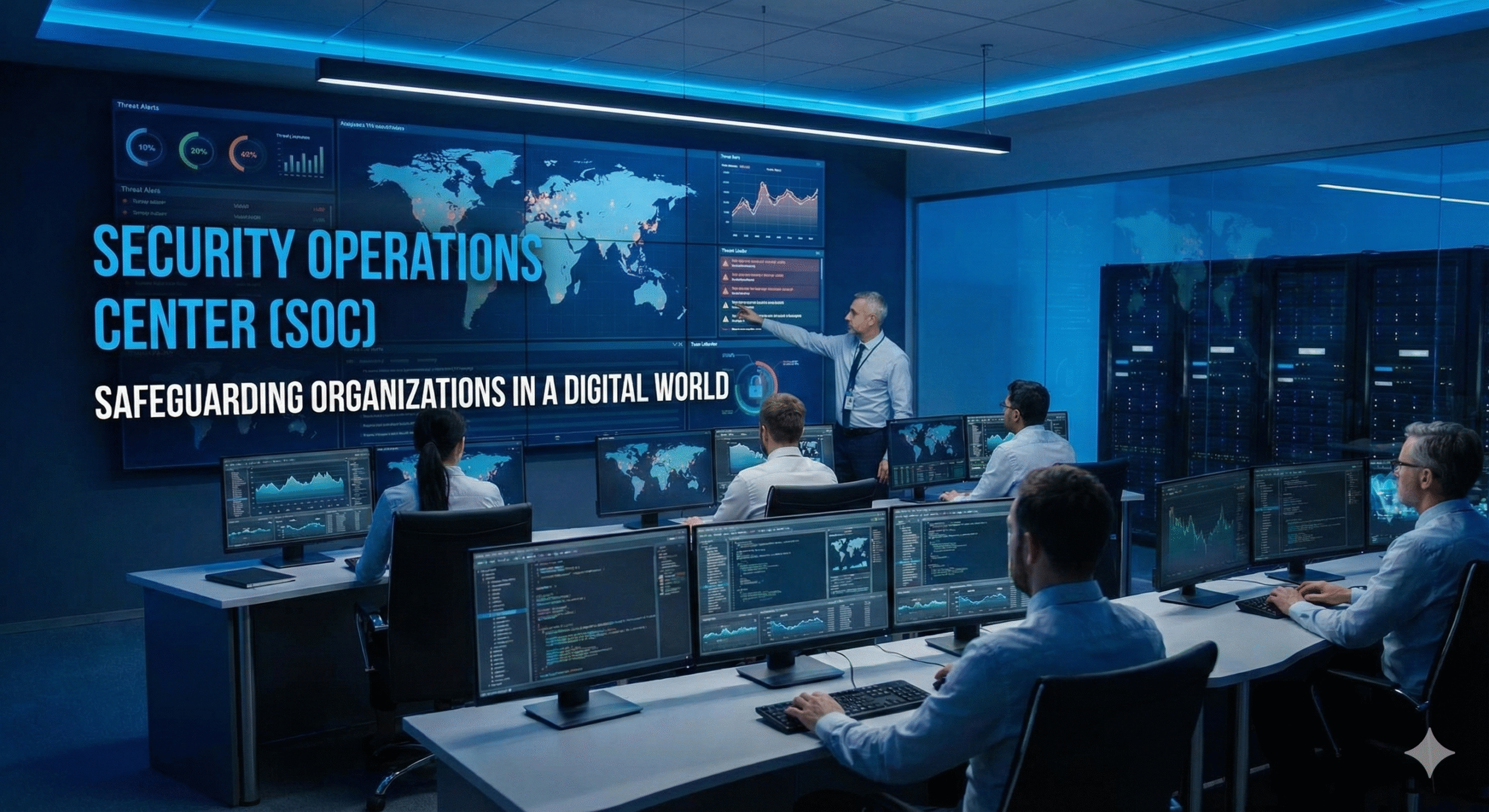
Cyberattacks can happen anytime and anywhere, which means organizations need to keep a close watch on any suspicious activity 24 hours a day, 7 days a week. With cyber risks evolving daily, establishing a Security Operations Center can help reinforce your security measures.
SOC stands for security operations center. It is a centralized unit that employs IT professionals who monitor, detect, analyze, and respond to cybersecurity threats as they occur.
SOC services involve real-time security monitoring across your networks, endpoints, operating systems, apps, databases, servers, and more. A SOC analyst’s primary responsibility is to prevent breaches by spotting security abnormalities and investigating them prior to breaching security perimeters.
Cyber criminals never sleep, so your SOC team shouldn’t either. Operating in shifts, a SOC team will help identify any suspicious activity day or night. Effective real-time security monitoring is crucial to any SOC’s success.
The first step to successful security event monitoring is to analyze your security feeds. This can include feeds from your firewall, intrusion detection systems (IDS), intrusion prevention systems (IPS), and other security tools.
Ongoing monitoring is essential to helping identify potential anomalies that could be signaling an active or impending attack. Many SOCs work in tandem with internal teams and outside security experts to reduce mean time to detection and mean time to response.
Before you can build a SOC that provides effective security services, you must first analyze your business and identify security challenges that you can strategically align your cybersecurity efforts with.
While some larger enterprises opt to build and maintain their own in-house SOC team, many businesses outsource their SOC management to a Managed Security Service Provider (MSSP).
At its core, a SOC works to monitor, detect, and alert your organization of any suspicious activity. Security operations centers will then take that information and act on it as soon as possible to stop threats from occurring.
SOC teams gather security data from a variety of sources like Security Information and Event Management (SIEM) systems and threat intelligence platforms. SIEM systems will aggregate data from your firewalls, IDS/IPS systems, endpoint security solutions, and any other security controls you have in place.
If any anomalies, indicators of compromise (IOC), or suspicious behavior is detected, alerts will be generated and escalated to your SOC analysts for remediation. Detecting threats as soon as possible allows you to greatly decrease the chance for breaches to occur.
Ensure you have discovery and visibility of all hardware, software, and technologies that could be attacked.
Monitor networks and systems behavior to help identify anomalous behavior.
Keep activity logs to help establish a baseline for normal activity. This will allow you to efficiently analyze security incidents and discover root cause.
Assign severity levels to security alerts.
Isolate the threat and remediate any damaged as your internal first responders.
Analyze log and forensic data to determine how and why an incident happened.
Ensure you’re meeting regulatory requirements, industry standards, and internal security policies.
Having centralized visibility will allow your business to identify and respond to security threats faster across your networks, systems, and endpoints.
Minimizing security breaches will ensure your customers’ data is safe and secure which will allow your customers to continue trusting your brand.
While hiring a SOC may be an initial investment, it could save you money in the long run by preventing security breaches.
Stay one step ahead of threats by performing preventive maintenance like updating patches, tweaking rules, and updating policies.
Continuously monitor networks and systems for abnormal behavior.
Work to eliminate any threats that are found.
Work to enhance security tools, policies, and procedures.
Ensure your organization is following GDPR, HIPPA, PCI DDS, and other security standards.
Cyber Security Hive offers affordable, scalable cybersecurity services and Managed SOC services for businesses of all sizes. Our certified engineers have experience in penetration testing, endpoint security, and 24/7/365 threat detection and monitoring.
Avoid the hassles of managing an in-house SOC team and gain real-time remediation from our monitored security operations center.
Our security experts will help identify and stop threats quickly.
We’ll work with you to develop a security strategy that works for your organization. This can include vulnerability management, penetration testing, and more based on your organizational threat landscape.
We can also help you meet compliance standards like GDPR, HIPPA, PCI DSS, and more.
Help employees become the strongest link in your security chain with awareness training and simulated phishing exams.
Invest in real-time cybersecurity protection and long-term security strategy with Cyber Security Hive.
Effective security monitoring is only one piece of the puzzle that makes Security Operations Centers so successful. Whether you are looking for an in-house or outsourced solution, a SOC will help you minimize cyber risk, prevent attacks, and maintain customer loyalty by limiting downtimes.