




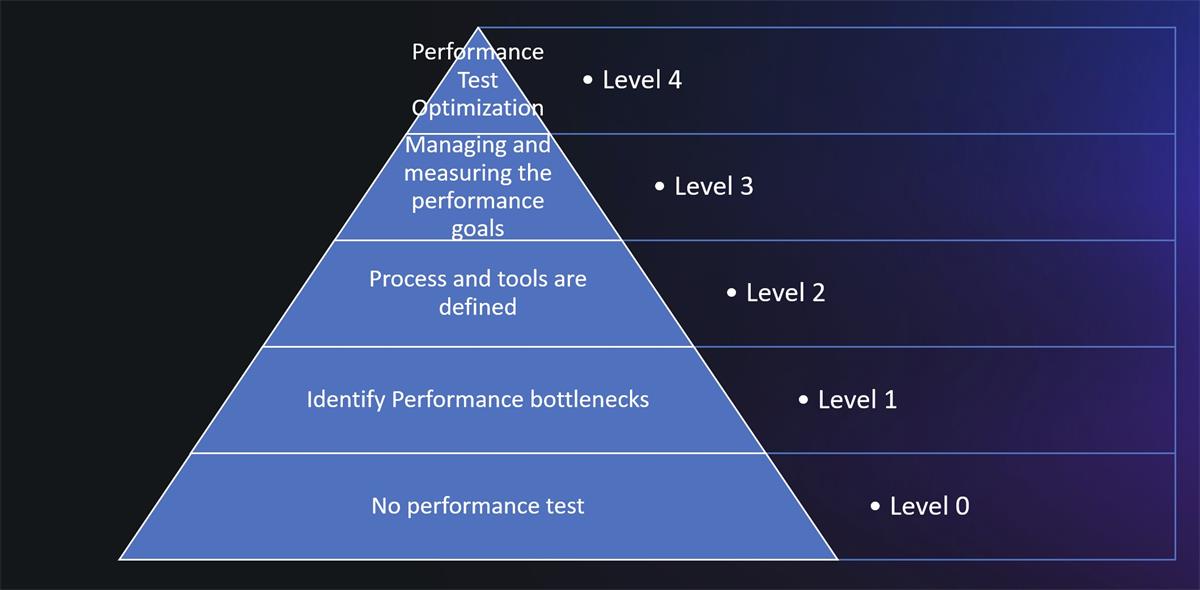
The Testing Maturity Model (TMM) was first developed by the Illinois Institute of Technology and is based on the Capability Maturity Model (CMM). It is a framework designed specifically for test process improvement. TMM can be used either in conjunction with other process improvement models or as a stand-alone model for enhancing testing practices within an organization.
TMM consists of two major components:
These levels define the testing capability of an organization and include:
The assessment model includes:
The five levels of TMM help organizations determine the maturity of their testing processes and identify improvement steps required to advance to higher maturity levels.
The primary goal at this level is simply to ensure that the software runs successfully. No defined testing processes exist, and testing is largely ad hoc. There is a lack of trained personnel, tools, and resources. Quality assurance activities are minimal or absent, and defects are often discovered late in the development cycle or after delivery.
At this level, testing and debugging are clearly distinguished as separate activities. The main objective is to establish testing goals, policies, and procedures. Testing is performed after the coding phase, and its primary purpose is to verify that the software meets specified requirements.
The goal of Level 3 is to integrate testing into the entire software development life cycle. Testing activities are aligned with requirements, and test objectives are clearly defined. Testing is recognized as a professional discipline rather than an afterthought.
This level focuses on establishing a formal testing measurement program. Testing is fully integrated throughout the life cycle, and quantitative metrics are used to monitor test effectiveness and quality. A dedicated test organization exists, and testing is treated as a managed and measurable process.
Level 5 emphasizes continuous improvement and optimization of the testing process. Testing effectiveness and costs are measured and controlled. Practices such as defect prevention, process reuse, and quality control are implemented. Advanced tool support is available for test case design, defect tracking, and metrics collection.
Software maintenance becomes increasingly expensive and time-consuming when defects are identified after project delivery. Therefore, while defect detection is essential, it is equally important to minimize errors during the development phase itself. A standardized testing framework such as the Testing Maturity Model (TMM) helps organizations achieve this goal by improving the maturity and effectiveness of their testing processes. By adopting TMM, organizations can enhance software quality, reduce costs, and deliver more reliable products.