




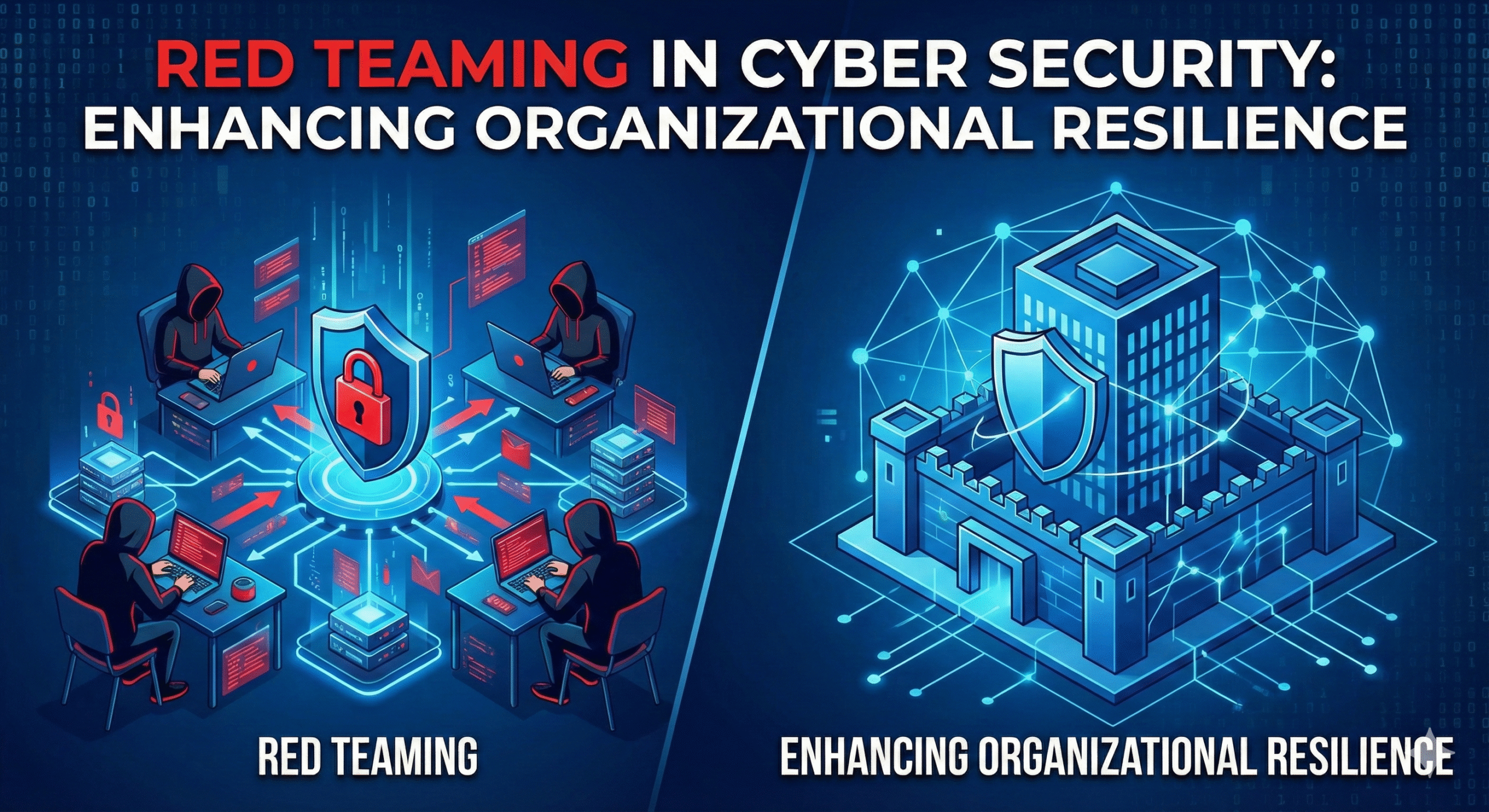
A red team assessment is an ethical hacking exercise performed by expert hackers to simulate real-world attacks using authentic threat actor tactics techniques and procedures (TTPs). Attack simulations are carried out on organizations to identify vulnerabilities in their systems, processes, and people from an attacker’s perspective.
If you’re looking to gain valuable insight into your organization’s ability to withstand realistic threats, a red team exercise is a great solution. Red team assessments test how well your organization can prevent, detect, and respond to advanced, adversarial attacks.
Here’s why red teaming exercises are important:
Identifying your most critical assets and information that can be easily compromised helps you understand where your business is most vulnerable. At Cyber Security Hive, we help our clients discover which threats can cause serious damage to their business continuity plans, compromise sensitive data, and even violate regulatory compliance.
Cyber Security Hive’s red team assessments allow you to test your security controls, people, and processes against actual attacker TTPs in a safe and planned environment. Running table-top style attack simulations enables organizations to be ready for when a cyberattack occurs and how to reduce the impact.
A blue team is your in-house security defense team. Cyber Security Hive works closely with your blue team to enhance your security posture by improving your ability to detect and respond to attacks. You’ll also gain better visibility into your attack surface and use actual red team attacks to focus on security training and remediation.
Our methodology is designed to be thorough and to produce quality results.
We start every red team engagement by learning everything we can about our target. This includes basic information about the company, employees, and technology stack. Using public and internal resources, our ethical hackers gather as much intelligence as possible to develop a practical attack plan.
After determining where we can attack, the team builds out all of the tools we may need to exploit the client organization. This can involve setting up command and control servers, creating custom malware, and even building social engineering campaigns specific to your industry.
Now it’s time to launch the attack. This can be done in a variety of ways such as attacking the client’s infrastructure, sending phishing emails, or physically accessing the target location to plant malware.
Once inside, the red team will work to achieve their goals which are typically similar to a real attacker’s goals. Moving around the network, upgrading privileges, bypassing security controls, hacking cameras, and extracting data are all done relative to the client’s business.
When the attack simulation is over, we provide clients with a comprehensive report that details every attack path we took and were successful in exploiting. All vulnerabilities are listed and remediation is prioritized to create actionable results. The report is structured so that it can be read by both technical and non-technical audiences.
The more your organization is exposed to actual attacks, the better you’ll become at detecting future attacks.
Oftentimes security teams can become overwhelmed with countless security alerts. Cyber Security Hive’s assessments will help you identify what security tools and technologies you should focus your budget on.
Helps meet regulatory compliance requirements that are specific to your industry. Also aids in your overall enterprise risk management program.
Once Cyber Security Hive has completed a red team assessment for your organization, we provide actionable recommendations that you can use to continuously improve.
If you’re serious about testing how secure your organization really is, contact us today to learn more about our red team services.
Red Teaming gives organizations actionable insight into their overall security posture. The Cyber Security Hive Red Team will work with you to identify weaknesses that a real-world attacker would exploit.
Partner with Hive for professional Red Team services and start improving your organization’s security today!