




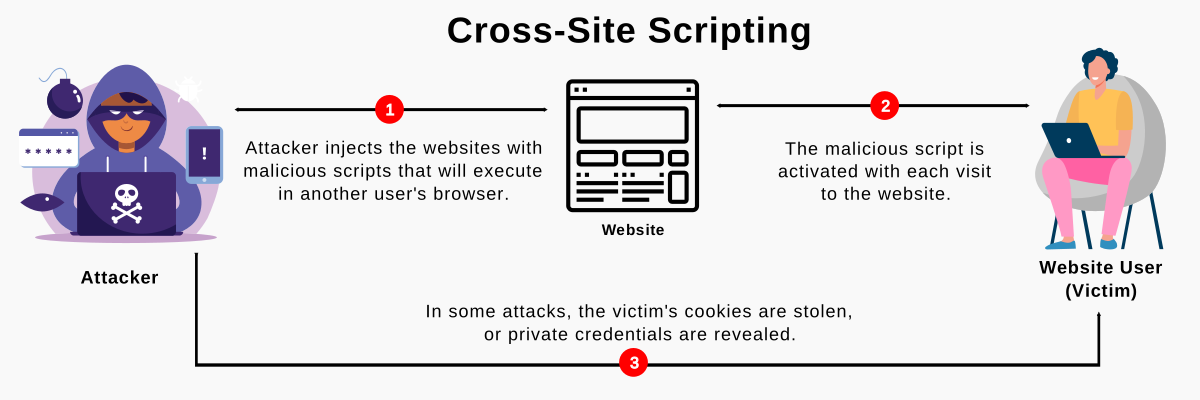
Cross-site scripting (XSS) is a web application vulnerability that occurs when dynamically generated web pages display user input without proper validation or encoding. This allows attackers to inject malicious JavaScript code into web pages, which then executes in the victim’s browser.
XSS can potentially affect any website that accepts user input, making it one of the most common and dangerous web security vulnerabilities.
XSS vulnerabilities are frequently found in:
A successful XSS attack can enable an attacker to steal sensitive information, hijack user sessions, manipulate cookies, impersonate legitimate users, or execute malicious code on the victim’s system.
In reflected XSS attacks, malicious scripts are injected into requests—such as URLs, form fields, cookies, or HTTP headers—and are immediately reflected in the server’s response.
Attackers often trick victims into clicking a malicious link, which causes the script to execute in the user’s browser. Once executed, attackers can steal session cookies or perform actions using the victim’s privileges without requiring a password.
This type of XSS commonly affects search pages and error messages that echo user input.
Stored XSS occurs when malicious code is permanently saved on the server, such as in a database, comment field, or message board. Every time a user visits the affected page, the malicious script executes automatically in their browser.
Stored XSS is particularly dangerous because it can impact all users who access the compromised content. Consequences include session hijacking, privilege escalation, data theft, and complete account compromise.
DOM-based XSS, also known as Type 0 XSS, occurs entirely on the client side. The malicious payload is injected through a URL or user input but never reaches the server.
Instead, insecure JavaScript on the webpage processes untrusted data from the Document Object Model (DOM) and executes it. Because the server is not involved, detecting this type of XSS is more challenging. Like reflected XSS, DOM-based attacks typically require users to click a malicious link.
The primary difference between the three XSS types lies in where the malicious code is executed:
Another difference is persistence:
Regardless of the type, preventing XSS is the responsibility of application developers, as even a single vulnerability can compromise the entire system.
Preventing XSS requires a collaborative effort between developers, server administrators, browser vendors, and end users. Web security is not a one-time task—it must continuously evolve as attack techniques change.
The most effective way to reduce XSS risk is proper input validation and output encoding. Key practices include:
< to <) into HTML entitiesEven with these precautions, developers must remain vigilant—one overlooked vulnerability can compromise the entire application.
From a user perspective, the safest—but least practical—option is disabling scripting languages in the browser. However, this can break website functionality.
Better user-focused defenses include:
The safest approach is to access websites directly rather than following unknown links.
Browser vendors play a critical role in mitigating XSS. Users should:
Modern browsers can also limit script execution by enforcing same-origin policies and restricting scripts from untrusted domains—significantly reducing the impact of XSS attacks.
Cross-site scripting remains one of the most prevalent web application vulnerabilities due to its simplicity and high impact. While no single solution can eliminate XSS entirely, a layered security approach—combining secure coding practices, user awareness, and browser-level protections—can significantly reduce risk.