




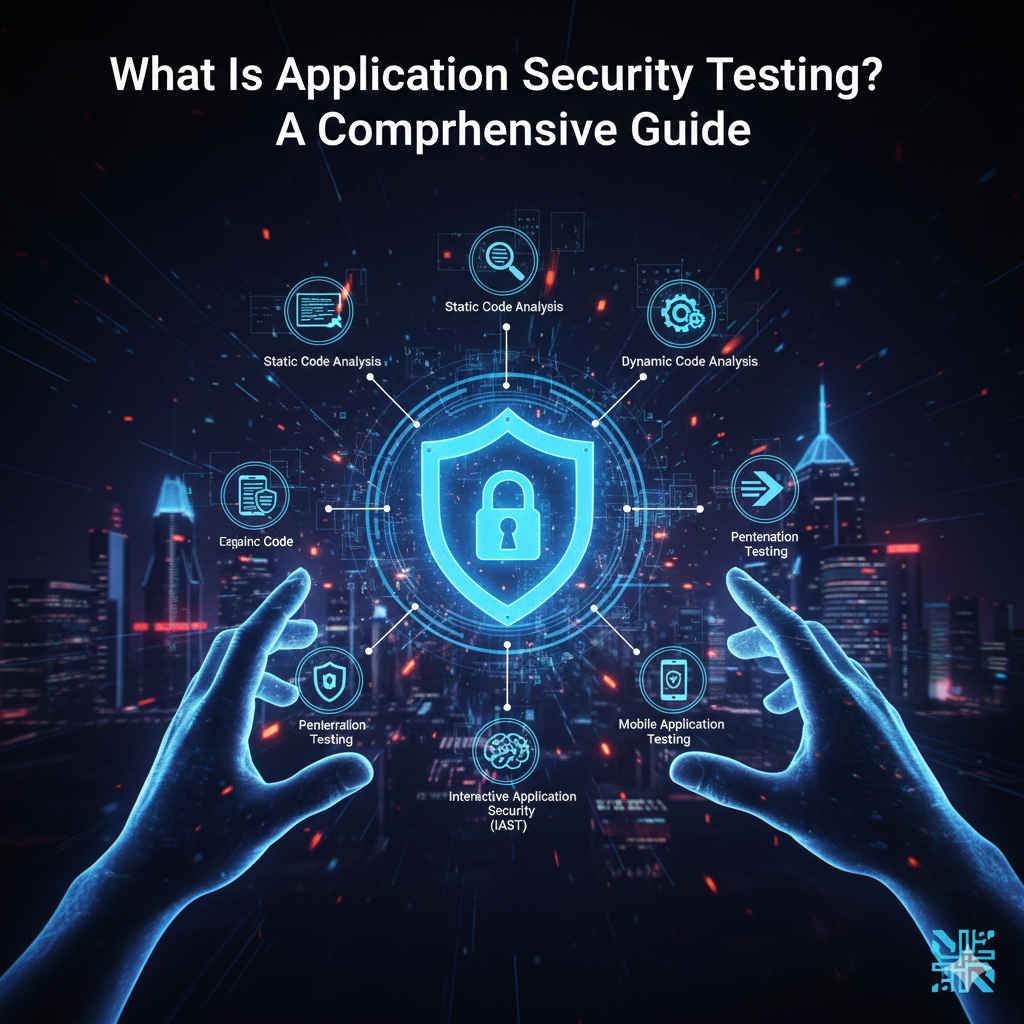
In a world where digital threats loom larger than ever, securing software applications is no longer a luxury—it is a necessity. As a content writer closely following technology trends, I’ve seen businesses repeatedly grapple with one fundamental question: What is application security testing?
At its core, application security testing (AST) is the process of identifying and mitigating vulnerabilities in software to protect it from exploitation. Whether it’s a web application, mobile platform, or desktop solution, AST uncovers weaknesses that could cost businesses their reputation, data, and revenue. This guide explores the essence of application security testing, its importance, key types, and real-world applications—updated for the evolving cyber landscape of 2025.
Application security testing is the proactive identification of flaws in a software system—essentially a digital health checkup. By uncovering vulnerabilities such as coding errors, insecure configurations, or logic flaws, AST helps ensure applications can withstand cyberattacks.
AST is not a one-size-fits-all approach. It encompasses a range of tools and techniques applied across different stages of the software development lifecycle. Broadly, it falls into two categories:
The underlying principle is simple: find and fix weaknesses before attackers exploit them. In 2025, with global cybercrime costs projected to exceed $10 trillion annually (Cybersecurity Ventures), application security testing is not optional—it is a business imperative.
Common risks AST helps mitigate include:
The stakes continue to rise. While the 2016 Breach Level Index recorded 728 data breaches in the U.S., India’s CERT-In reported over 1.5 million cyber incidents in 2024 alone. As a result, organizations of all sizes now prioritize application security testing to stay ahead of increasingly sophisticated attackers.
In an era dominated by large-scale data breaches, protecting sensitive information—customer identities, financial data, health records, and proprietary business data—is critical. Users are increasingly cautious about sharing information online, fearing exposure or misuse.
Industries such as retail, banking, and healthcare rely heavily on AST to secure APIs, encrypt data, and validate application logic. For example, a 2024 e-commerce breach in India exposed two million user records due to a preventable SQL injection flaw—one that application security testing could have identified early.
2025 insight: With India’s Digital Personal Data Protection Act (DPDPA) now fully enforced, non-compliance penalties of up to ₹250 crore make AST a legal necessity, not just a best practice.
Practical tip: APIs and databases remain the most common entry points for attackers—prioritize testing them thoroughly.
Trust has become a form of currency. The earlier security flaws are detected and fixed, the safer the application—and the stronger the brand reputation. Companies that integrate application security testing throughout development consistently report higher user retention and customer confidence.
A 2024 NASSCOM survey found that 78% of Indian consumers prefer brands with strong security practices, highlighting how AST directly contributes to loyalty, reputation, and long-term revenue growth.
Application security testing identifies vulnerabilities—such as weak authentication, insecure dependencies, or unpatched code—before attackers can exploit them. When embedded into CI/CD pipelines, AST streamlines development workflows while ensuring compliance with standards like the OWASP Top 10.
According to a 2025 IBM report, organizations using AST effectively reduced breach-related costs by up to 40%, saving both time and resources.
Example: A fintech application detected a Cross-Site Scripting (XSS) vulnerability during AST prior to launch, preventing an estimated ₹40 crore loss.
Application security testing is not a single technique but a collection of complementary methods, each suited to different use cases.
What it is:
SAST analyzes an application’s source code during development, making it a white-box testing approach.
How it works:
It scans code written in languages such as Java, Python, .NET, and JavaScript for vulnerabilities like SQL injection and XSS before compilation. Tools such as SonarQube and Checkmarx highlight vulnerable code paths.
Benefits:
2025 trend:
AI-enhanced SAST tools can now predict vulnerabilities with up to 90% accuracy, according to Gartner.
What it is:
DAST tests applications while they are running, using a black-box approach with no access to source code.
How it works:
Tools like OWASP ZAP and Burp Suite simulate real-world attacks by probing live applications for weaknesses.
Benefits:
2025 insight:
With cloud adoption exceeding 80% among Indian enterprises, DAST has become indispensable.
What it is:
IAST combines elements of SAST and DAST, testing applications dynamically while pinpointing exact code-level vulnerabilities.
How it works:
IAST agents run alongside the application during testing or within CI/CD pipelines, offering real-time feedback. Tools such as Contrast Security excel in this space.
Benefits:
Industry insight:
IAST adoption in India’s IT sector grew by 30% in 2024, driven by agile development practices.
What it is:
Manual penetration testing simulates real-world cyberattacks conducted by skilled security professionals.
How it works:
Testers attempt to exploit vulnerabilities such as weak authentication flows or insecure business logic—often uncovering issues automated tools miss.
Benefits:
2025 update:
With ransomware attacks rising sharply, demand for manual testing continues to grow due to its human intuition and creativity.
Effective AST spans the entire software lifecycle:
A 2025 example: An Indian SaaS startup combined SAST, DAST, and manual testing to secure its cloud platform, avoiding an estimated ₹2 crore in breach-related costs.
Despite its value, AST faces challenges such as false positives, evolving zero-day threats, and high tooling costs. However, advancements in AI and machine learning are rapidly improving detection accuracy and prioritization.
Looking ahead, India’s major tech hubs are leading AST adoption, with over 60% of enterprises planning upgrades by 2026. Regulatory pressure from the DPDPA further accelerates this shift.
So, what is application security testing? It is the foundation of secure software—protecting data, preserving trust, and defending against modern cyber threats. From SAST’s code-level analysis to penetration testing’s real-world simulations, AST delivers a layered defense strategy fit for 2025 and beyond.
With cyber incidents continuing to rise, the question is no longer whether you need application security testing—but how soon you implement it. Start now. Your application’s security cannot afford to wait.